
If you ask most business owners whether they respond quickly to customer inquiries, the answer is usually yes.
They have a team. They answer calls. They check emails. They do their best to follow up.
And yet, many customers quietly walk away because they never heard back, heard back too late, or did not know what to expect next.
This is not about effort. It is about visibility.
Most response problems happen without anyone realizing they exist.
The gap between effort and experience
Inside the business, it feels busy.
Phones ring. Emails arrive. Website forms come in. Messages stack up across different tools and inboxes.
From the customer’s point of view, however, there is only one question.
Did anyone respond?
When response systems are spread across tools, people, and schedules, it becomes almost impossible to see the full picture. A missed call might get logged. An email might get buried. A website inquiry might wait until tomorrow.
None of these moments feel like a failure internally. But to the customer, silence feels final.

Why businesses overestimate their response speed
Most businesses judge response speed based on intention rather than outcomes.
Common assumptions sound like this.
We usually call people back.
We check emails throughout the day.
We respond quickly during business hours.
The problem is that customers do not experience averages. They experience moments.
One missed callback.
One delayed reply.
One unanswered inquiry after hours.
Those moments are rarely tracked, reviewed, or discussed. Over time, they quietly add up.
Customer experience research consistently shows that a single poor response can influence future decisions. Studies from PwC indicate that customers are willing to switch providers after one unsatisfactory interaction. This makes even small response gaps more important than they may appear internally.
The invisible places where inquiries slip through
Response gaps often show up in predictable places.
After business hours when no one is watching the inbox.
During busy periods when calls go unanswered.
On websites where inquiries wait without confirmation.
Between hand-offs where responsibility is unclear.
These are not failures of people. They are gaps in process and visibility.
Because no single system sees everything, these gaps remain invisible.

Why customers rarely complain about slow responses
One of the hardest parts of this problem is that customers rarely tell you when it happens.
They do not email to say they waited too long.
They do not call back to say they moved on.
They simply choose another option.
From the business side, it looks like a normal day. From the customer side, the conversation never started.
Speed today is about reassurance, not urgency
Customers are not always demanding an immediate solution.
Often, they just want to know that someone is paying attention.
A quick acknowledgment.
A clear next step.
A sense that their inquiry was received.
When that reassurance is missing, uncertainty sets in. And uncertainty drives people elsewhere.
Research supports this shift. According to HubSpot, the majority of customers expect a response as soon as they reach out. Harvard Business Review has also reported that response delays significantly impact whether a customer continues the conversation. These expectations are not extreme. They are becoming standard.
Why tools alone do not fix the problem
Many businesses try to solve response issues by adding tools.
A new inbox.
A new CRM.
A new notification system.
Without clarity, tools create more noise, not more visibility.
The real challenge is understanding where responses slow down, stop, or disappear entirely.
That insight rarely comes from dashboards alone.

Why self assessment works better than assumptions
The most effective way to uncover response gaps is not by guessing or adding software.
It is by asking the right questions.
Questions like how inquiries are handled across channels.
Questions about after hours coverage.
Questions about follow up consistency.
When teams step back and answer these questions honestly, patterns start to appear.
That clarity is what turns effort into improvement.
Start with awareness before automation
Automation can be incredibly helpful. But only when it is applied in the right places.
Before changing systems or adding tools, it helps to see the full picture.
Where do inquiries arrive.
Who responds and when.
What happens when no one is available.
Once those gaps are visible, solutions become obvious and often simpler than expected.
A simple next step
If you are curious how this shows up in your business, there is an easier way than guessing.
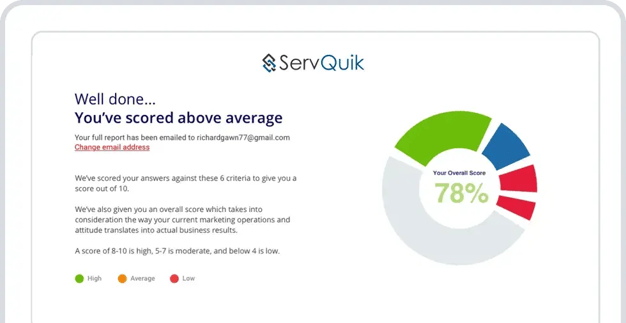
A short self assessment can reveal where response gaps exist across calls, email, and website inquiries.
It takes a couple of minutes and the results appear instantly.
That clarity is often the first step toward responding faster without adding more work.
Conclusion
Sometimes the biggest gaps are the ones we do not see. Thinking you respond quickly and actually doing it consistently are not the same thing. By stepping back and honestly looking at how inquiries flow through your business, you can begin to notice patterns, small leaks, and hidden delays that creep into customer experience. When you know what is happening, you can make choices with confidence rather than guessing. A short assessment can help make these patterns easier to see. If you are curious how this shows up in your business, that simple first step often surfaces insights teams did not expect.
Curious how your business compares?
Take our short assessment to see where response gaps may exist.



Comments